
The Essentials of French Market Shopping: Seasonal Produce, Etiquette, and Building Vendor Relationships
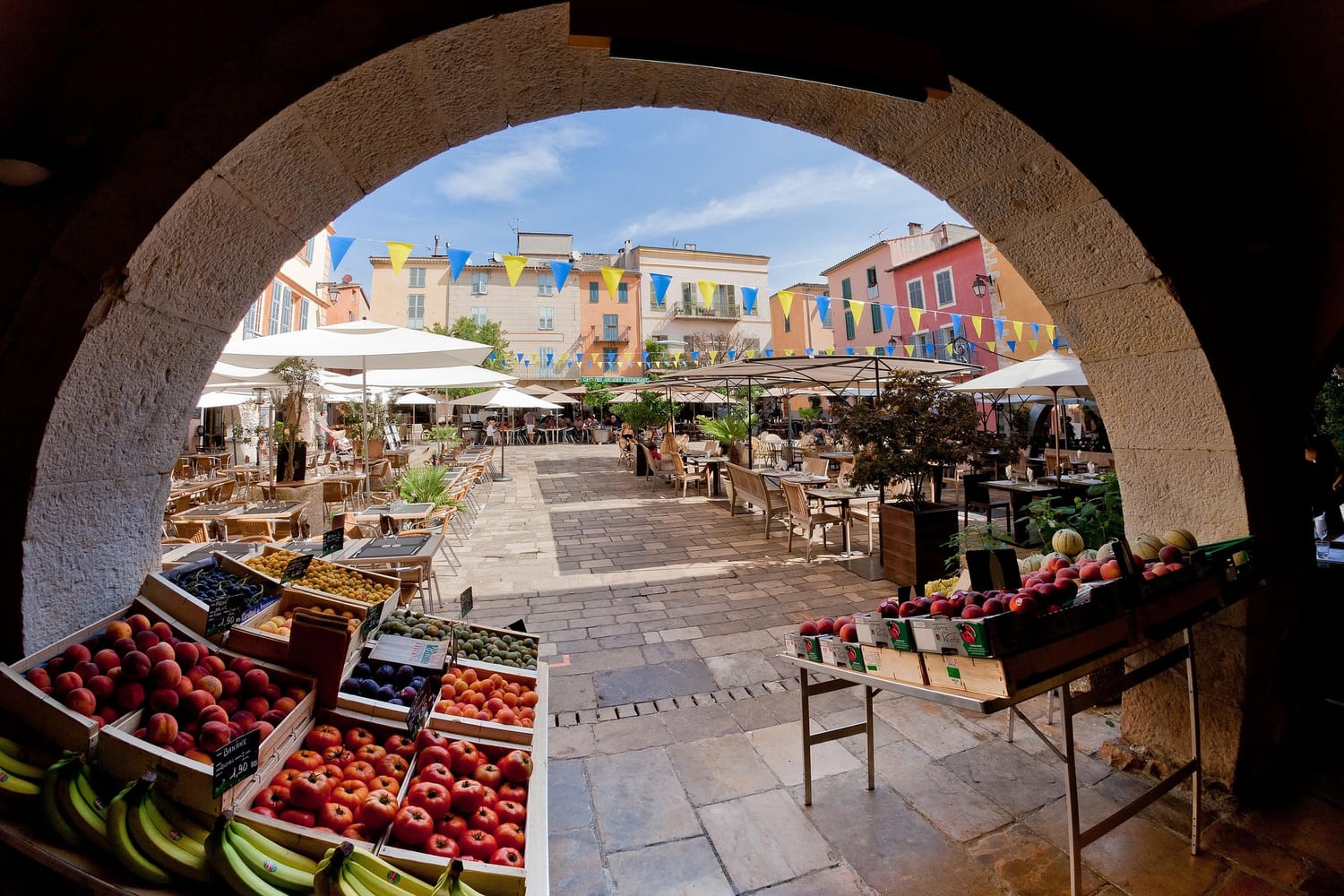
The first time I walked into the Saturday market at Place de la Comédie in Montpellier, I felt like I'd stumbled onto a film set. The light slanting through canvas awnings, the towers of heirloom tomatoes in shades I didn't know existed, the cheese vendor calling out his specials in a Provençal accent thick as crème fraiche. It was almost too picturesque to be real. But there I stood, clutching my canvas bag like a talisman, utterly uncertain where to begin.
Five years on, I navigate these markets with the easy confidence of someone who knows which vendor saves the best figs for regulars, where to find the last of the season's white asparagus, and exactly how to ask for une petite barquette without getting a condescending smile. The transformation didn't happen overnight. It required patience, humility, and a willingness to accept that shopping at a French market is about far more than acquiring groceries. It's a weekly ritual of community, seasonality, and human connection that has fundamentally changed how I eat and live.
If you're considering retirement in France or have recently arrived, understanding market culture is essential. This isn't simply about where to buy vegetables. It's about integrating into the social fabric of French life, one conversation and one purchase at a time.
The Architecture of a French Market
French markets follow an unwritten geography that becomes intuitive with time. The primeur, the produce vendor, typically anchors one end, often with the most abundant displays. You'll find the fromager (cheese seller) nearby, since many shoppers build their weekly menu around what's exceptional in both categories. The charcuterie follows, then perhaps a fishmonger if you're near the coast, or a stand selling regional specialties—tapenade in Provence, duck confit in the Southwest.
The butcher might be absent; many markets don't carry fresh meat, which French shoppers tend to buy at their neighborhood boucherie. You will find rotisserie chicken, though, turning slowly over open flames, the smell alone enough to derail your shopping list. There are olive vendors, flower sellers, the woman who makes honey from her own hives in the Cévennes, and someone selling nothing but garlic in forty varieties.
At the edges, you'll encounter what I think of as the cultural garnish: the Moroccan man selling dates and preserved lemons, the organic farmer who only comes once a month, the antiques dealer who somehow always has exactly the vintage tablecloth you didn't know you needed. This outer ring changes with the seasons and the whims of individual vendors, while the core—produce, cheese, bread—remains constant.
Most markets operate one or two days a week, typically including Saturday morning. In cities like Montpellier or Lyon, you'll find daily covered markets—les halles—that function as permanent fixtures. These tend to be pricier but offer the convenience of regular hours and climate control. For the full experience, though, nothing matches the open-air market, where you shop under the sky and the season is unavoidably present.
Seasonal Wisdom: What to Buy When
If there's one principle that governs French market shopping, it's seasonality. Not as a trendy concept but as an immutable fact. You cannot buy asparagus in November because it doesn't grow then. This seems obvious until you're standing in front of the primeur in December, craving a tomato salad, only to confront the reality that tomatoes in winter are both expensive (around $11 per kilogram) and mediocre.
The rhythm of the market year began to teach me patience. Spring announces itself with fat white asparagus from the Camargue, selling for $16 - $22 per kilogram, depending on thickness. The season lasts perhaps six weeks, and during that time, you eat asparagus constantly because next week it will be gone. This creates a kind of anticipatory pleasure I never experienced shopping at supermarkets that offered everything year-round.
Late spring brings the first strawberries, small and intensely flavored, nothing like the massive, hollow berries engineered for transport. These local gariguettes cost around $8-10 per kilogram, twice the price of imported varieties, but the difference is profound. You learn quickly that the market rewards those who buy at its peak rather than trying to force nature's calendar.
Summer is the season of abundance. Tomatoes in a dozen varieties, the knobby coeur de boeuf, tiny cherry clusters still on the vine, striped heirloom varieties with names like Noire de Crimée, appear in late June and dominate through September. Expect to pay $5-8 per kilogram for excellent specimens, more for the rare varieties. Zucchini multiply faster than you can eat them. Peppers arrive in every color. This is when you learn to preserve—making ratatouille to freeze, tomato sauce to jar, pesto from the basil that grows wild.
The melon vendor becomes your most important relationship. A good Cavaillon or Charentais melon, perfectly ripe, is a transcendent experience. But melons are notoriously difficult to judge. I watched my vendor for weeks, observing how she pressed the stem end, sniffed the skin, and hefted each one before selecting. Eventually, she started choosing for me, and now I trust her completely. A perfect melon costs around $4-6 each and is worth every cent.
Autumn brings mushrooms, cèpes, girolles, trompettes de la mort, foraged from nearby forests and sold at prices ($33-44 per kilogram) that reflect both their scarcity and the labor of hunting them. Root vegetables appear: celeriac, parsnips, and different squashes with the earth still clinging to their skins. This is chestnut season too, when vendors roast them on portable grills, and the smell draws you across the market.
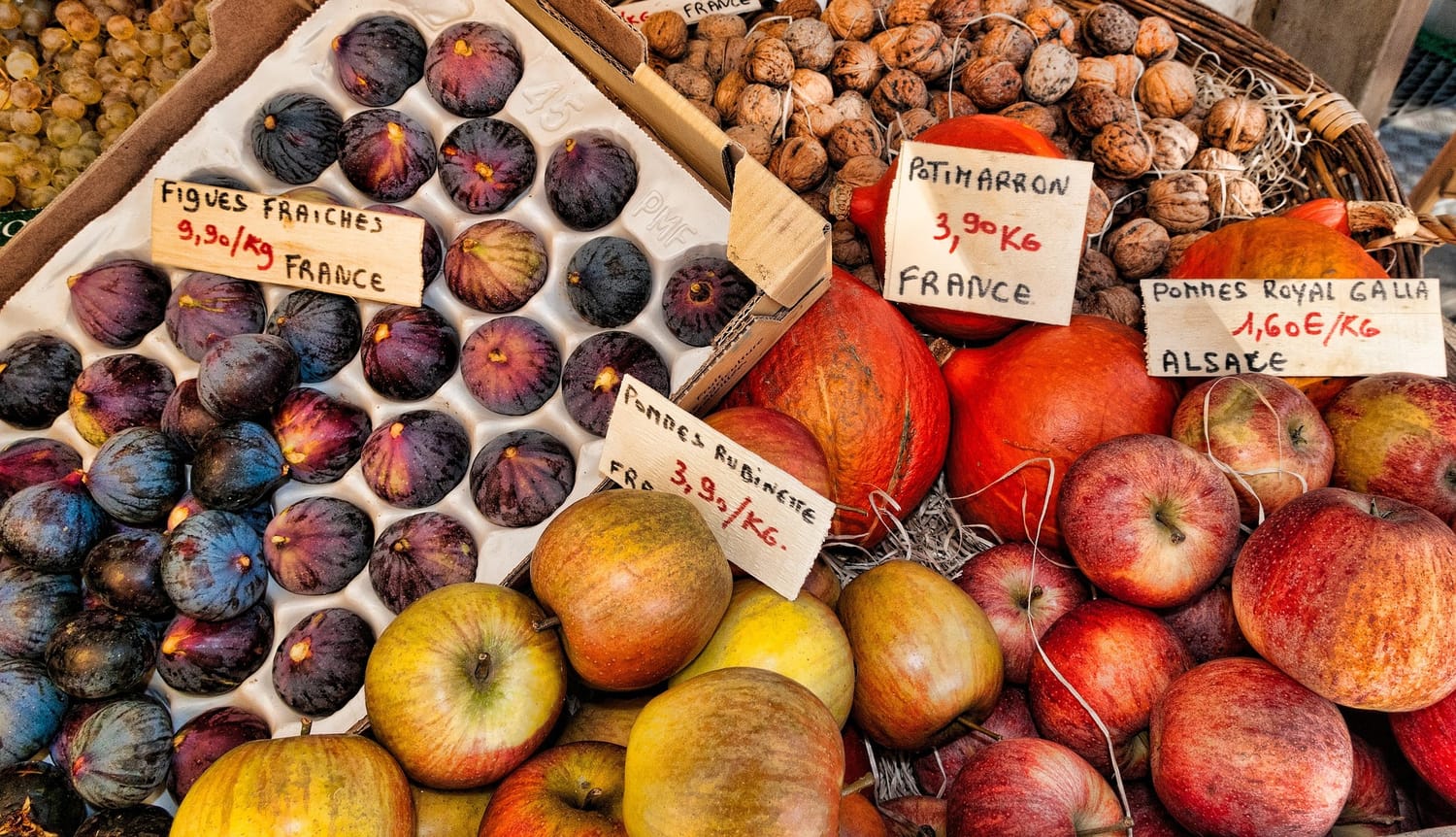
Figs deserve special mention. The late-summer figs from local trees, often from the vendor's own garden, are so fragile they barely survive the trip from tree to market. They cost around $8-11 per kilogram, spoil within days, and represent everything I love about market shopping: intensely local, impossibly fresh, and available for such a brief window that you cannot take them for granted.
Winter is the test. The market contracts. You eat a lot of cabbage, leeks, potatoes, and the sturdy greens that can handle frost. Citrus arrives from Spain and Corsica. This is when I appreciate the fromager most. A good cheese course can transform a simple winter meal into something celebratory. Expect to pay $18-27 per kilogram for artisanal cheeses, more for rare or aged varieties.

If you're seriously considering a move to France, I encourage you to explore our Move to France Masterclass. This comprehensive online course provides detailed guidance on every aspect of relocating to France, from visa applications and housing searches to cultural integration and community building. Learn from experts and experienced expats who have successfully navigated the journey you're contemplating.
The Unspoken Rules: Market Etiquette
I learned market etiquette through a series of small humiliations. The first time I reached out to squeeze a peach, the vendor's hand shot out to stop me. "On ne touche pas," she said firmly. You don't touch. At French markets, the vendor selects your produce. You can point, you can request, but you don't paw through the merchandise choosing your own specimens. This felt uncomfortable at first. What if she gave me the bad ones? But I came to understand it as a form of professional pride. She knows her produce. She'll give you what's good.
The greeting is non-negotiable. You don't approach a stall in silence and start pointing at items. You begin with "Bonjour, madame" or "Bonjour, monsieur." This acknowledgment of their humanity before you request their service is fundamental to French commerce. Skip it, and you mark yourself as an outsider. Even after years, I sometimes notice vendors being more brusque with tourists who don't bother with a greeting.
The queue is sacred but invisible. There's rarely an obvious line. Instead, people cluster around the stall, and you must pay attention to who arrived before you. This requires observation and patience. I wait, making eye contact with the vendor to signal my presence, and when she asks, "Et après?" (And next?), I can step forward if no one else responds. Jump the queue, and you'll be firmly corrected, usually by other customers.
Small talk is expected, but shouldn't be excessive when the vendor is busy. A comment about the weather, appreciation for the produce, perhaps a question about preparation, these are welcome. Long conversations are reserved for slow moments or established relationships. I watched a regular chat with her cheese vendor for ten minutes about her daughter's wedding, but this was Tuesday afternoon at the covered market, with no queue forming.
Bring exact change when possible, especially for small purchases. Many vendors use a simple cash box and a limited set of bills. Bringing a 50-euro note to buy two euros' worth of radishes creates work for them and marks you as inconsiderate. I keep a small coin purse specifically for market shopping, loaded with ones, twos, and fives.
Bring your own bags. Vendors will have plastic or paper available, but there's a subtle judgment attached to needing them. The canvas bag or the wicker basket signals you're a serious market shopper, someone who came prepared. I have three bags of different sizes that live by the door, ready for market day.
Learn the difference between un kilo and une barquette. If you ask for "un kilo de tomates," you'll get a kilogram—quite a lot. For smaller quantities, request "une petite barquette" or "400 grammes" or specify the number of pieces: "trois tomates" is perfectly acceptable. The vendor will weigh them and tell you the price. Pay attention to these amounts; you'll need them next time.
Don't ask "What's good?" as if you're in a restaurant. Everything at a market vendor's stall is supposed to be good; it's their reputation. Instead, ask what's at its peak: "Qu'est-ce qui est bien mûr aujourd'hui?" This shows you understand seasonality and trust their expertise. They'll guide you to what arrived this morning or what's been perfectly ripened.
Building Relationships: From Transaction to Connection
The transformation from an anonymous customer to a regular customer happens gradually and cannot be forced. It starts with consistency. Showing up at the same market, week after week, shopping at the same stalls. The vendor begins to recognize your face. You're no longer a random tourist but someone who returns.
The breakthrough often comes through a small gesture. My cheese vendor remembered that I'd bought a Saint-Nectaire three weeks prior. When I returned, she asked how I'd liked it. This astonished me. She serves perhaps a hundred customers per market day. But I'd made an impression, possibly because I'd asked her advice about ripeness, shown I was willing to learn. From that conversation forward, our relationship changed. She began suggesting things I should try, warning me when a cheese I liked was nearly out of season, and saving me a piece of something special that sold out quickly.
With my produce vendor, the shift happened when I arrived one July morning, asking specifically for coeur de boeuf tomatoes—by name, in French, showing I knew what I wanted. He grinned and said, "Ah, madame knows her tomatoes!" After that, he'd call out to me when I approached: "Madame Susan! I saved you some beautiful figs." This sort of recognition, being seen as someone with discernment, matters enormously in market culture.
Loyalty is repaid with small privileges. My butcher at the covered market holds back two of the best lamb chops if I've mentioned I'm having guests for dinner. The olive vendor gives me tastes of new tapenades before they're officially for sale. The woman who makes honey slips an extra jar into my bag around the holidays. These gestures aren't about special treatment; they're the natural result of sustained, respectful commerce.
The language barrier, which I'd feared, became less significant than I'd imagined. My French was halting at first, but vendors have patience for those who try. They'd repeat words slowly, teaching me vocabulary: "C'est une pêche blanche—a white peach." "Ça, c'est du mesclun." Over time, shopping became language practice, each market day expanding my fluency with words I'd never encounter in a classroom: étuvée, juteux, fondant.
When you're truly established, the vendor might share something personal: a recipe, a complaint about the weather's effect on the harvest, or worry about their daughter's university exams. These glimpses into their lives are precious. You're no longer merely a customer; you're part of the community that sustains their livelihood and their purpose.
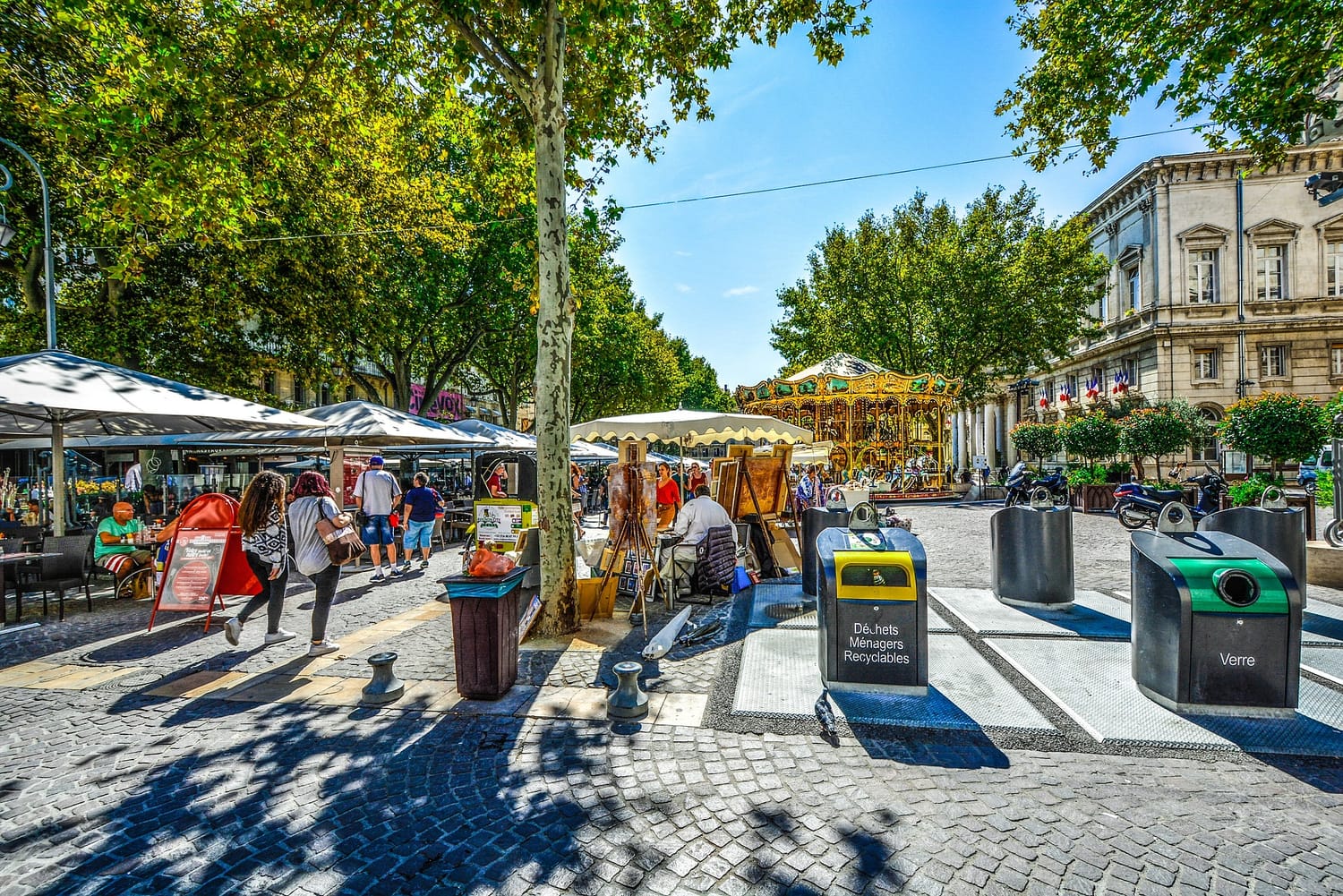
The Economics of Market Shopping
People often ask whether market shopping is more expensive than supermarkets. The answer is complicated. For basic staples—potatoes, onions, carrots—markets are competitive with supermarket prices, sometimes even cheaper. I pay around $2.20-3.30 per kilogram for good potatoes, similar to what Carrefour charges.
For premium items, heirloom tomatoes, artisanal cheese, wild-caught fish, markets are more expensive than supermarket equivalents but offer incomparably better quality. A supermarket Camembert costs perhaps $2.20-3.30; a farmhouse Camembert from my fromager costs $5.50-8.80 and tastes like an entirely different food. If you want the best France offers, you pay for it, but you also receive value beyond mere nutrition.
I budget approximately $110-165 per week for market shopping for two people, though this varies wildly by season. Summer, when produce is abundant and cheap, might be $88-110. Winter, when I'm buying more cheese and preserved items, can reach $165-220. We still shop at supermarkets for certain staples, olive oil, pasta, and cleaning supplies, but the market provides perhaps 60-70% of our weekly food.
The hidden economy is a reduction of waste. Because I'm shopping more frequently (twice weekly rather than one massive supermarket trip), I buy smaller quantities that we actually consume. The strawberries don't go moldy in the back of the fridge because I bought only what we'd eat in three days. This frequent, small-batch purchasing aligns better with how French people traditionally shop, daily or every other day, buying fresh food for immediate consumption.
There's also a psychological value that's harder to quantify. The market is entertainment, social interaction, and sensory pleasure rolled into a necessary chore. My Saturday morning routine, coffee at the café, market shopping, perhaps a glass of wine with a friend who's also shopping, has become one of the week's highlights. It's structured leisure, productive pleasure. What price would I put on that?
Practical Strategies for New Market Shoppers
Start small. Don't attempt to do all your shopping at the market immediately. Choose one or two categories, perhaps produce and cheese, and buy those at the market while still relying on supermarkets for other items. This reduces the overwhelm and lets you build relationships with a manageable number of vendors.
Arrive early but not too early. The first hour is when selection is best, but it's also when vendors are busiest and least inclined to engage in patient conversation with newcomers. I find the sweet spot is about 45 minutes after opening. The initial rush has cleared, but everything is still fresh.
Watch before you buy. Spend your first few visits observing. Notice how regulars interact with vendors. Listen to how they ask for items, what quantities they request, and what questions they pose. The market is a performance, and you learn the script through observation.
Prepare simple phrases in French. Even if your French is minimal, memorize the basics: "Bonjour," "Je voudrais..." (I would like), "C'est combien?" (How much?), "Merci, au revoir." Vendors appreciate the effort enormously, even if you mangle the pronunciation.
Ask for advice, but make it specific. Instead of "What should I buy?" try "I'm making ratatouille—which eggplant do you recommend?" This shows you have a plan and simply need expertise, which vendors are happy to provide.
Don't comparison shop, obviously. Wandering from stall to stall to check prices for the same item is considered rude. Choose your vendors and trust them. If you discover later that their peaches are 50 cents more per kilogram than the stall next door, that's fine. You're paying for a relationship and service, not just a commodity.
Bring a small notebook. I kept one for my first year, recording what I bought, what it cost, and what was in season. This helped me learn the rhythms and also remember the names of items I wanted to buy again. The notebook became a kind of field guide to my market education.
Accept that you will make mistakes. You'll buy too much, too little, the wrong item, or something you don't know how to prepare. The vendor who sold me celeriac root assumed I knew what to do with it. I didn't. I had to research recipes that evening, discovering it makes an extraordinary purée. These small errors are part of learning.
Unlock the secrets of the world's most successful entrepreneurs with the
Global Wealth Navigator Newsletter
Discover the world's best destinations offering a lower cost of living paired with an enriched quality of life with the Global Wealth Navigator Newsletter. Whether you're a retiree or an entrepreneur, we dive into strategies that open doors to international investments, tax optimizations, and discover the finest destinations offering a superior quality of life. Don't let borders or routine define you; lets find your ideal spot in the world, regardless of your income bracket.

The Market as Integration
When people ask me how I adapted to life in France, I often say it happened at the market. Not through formal language classes or cultural orientation, but through the weekly practice of showing up, attempting French, accepting correction, and gradually earning the small nods of recognition that signal belonging.
The market taught me that integration isn't about perfect fluency or encyclopedic knowledge of French culture. It's about participating in the rituals that structure daily life. It's about understanding that the formality of market etiquette isn't coldness but rather a framework for respectful exchange. It's about accepting seasonality as a virtue rather than an inconvenience.
My vendors know my name now. They ask about my writing, my garden, and whether I'm traveling next week. When I returned from a month in Canada, the cheese vendor welcomed me back with genuine warmth: "Ah, Madame Susan! We missed you. Look—I saved you some Beaufort d'alpage." It was the mountain-aged version, made from the milk of cows grazed at high altitudes, available only a few weeks each year. She'd remembered my preference and held back a piece.
These moments of recognition, of being known and remembered, are what turn a foreign place into home. The market became my neighborhood, the vendors my community. Through hundreds of small transactions, conducted in imperfect French, over vegetables, cheese, and olives, I found my place in this life I'd chosen.
The Rhythm of Weeks and Seasons
Five years in, my week orbits around market days. Saturday morning is sacred. The big market at Place de la Comédie where I do the major shopping. Tuesday afternoon, I visit the covered market for cheese, charcuterie, whatever I've run out of, or whatever looked particularly good that day. This rhythm has become so ingrained that I feel slightly untethered when I'm traveling and can't visit the market.
The seasons, too, have taken on new meaning. I mark time now not by months but by what's at the market. It's white asparagus season, cherry season, and mushroom season. This feels more ancient and more true than the arbitrary divisions of the calendar. I know it's really spring when the first gariguettes appear. Summer peaks when the melons are perfect. Autumn begins with the first cèpes, regardless of the date.
This seasonal awareness has changed how I cook. I no longer flip through cookbooks, deciding what I want to make, and then shopping for ingredients. Instead, I see what's beautiful at the market and plan meals around that. The menu follows the season's offering, which means we eat the same things in rotation; asparagus every day for six weeks, then tomatoes all summer, then squash through autumn. This could be monotonous, but somehow it isn't. The anticipation makes each food taste better when its time arrives.
What the Market Teaches About Life in France
The market is a microcosm of French values. The insistence on proper greetings reflects a culture that prizes formality and respect. The seasonal restrictions demonstrate a willingness to accept limits rather than demanding endless choice. The vendor relationships embody the French appreciation for expertise and craftsmanship. These aren't just people selling vegetables; they're professionals with deep knowledge about their products.
The pace of market shopping, slow, conversational, sensory, stands in opposition to the efficiency-above-all model of supermarket commerce. You cannot rush through a French market. Even if you tried, the queues and the social expectations would prevent it. This forced slowness was initially frustrating for someone accustomed to North American efficiency. But I've come to see it as a gift, a weekly reminder that not everything should be optimized for speed.
The market also reveals France's complicated relationship with change. These markets have operated in essentially the same way for centuries. The vendors might now accept credit cards, but the fundamental structure, direct sale from producer to consumer, personal relationships, and seasonal availability, remain unchanged. In a world of rapid transformation, the market is an anchor to older ways of living.
For retirees, this can be profoundly reassuring. We've lived through decades of accelerating change, and there's comfort in a practice that has endured. The market says: some things are still done the old way, the slow way, the human way. Your presence here matters. You're not just a transaction; you're part of a continuation.
More Than Shopping
When I left journalism and moved to France, I worried I'd lose my sense of purpose. Work had structured my identity for four decades. Who was I without it? The market, unexpectedly, provided part of the answer. I became a student again. Not of current events or political maneuvering, but of asparagus and etiquette, of seasons and relationships, of a culture revealed through commerce.
The market gave me a reason to practice French every week, forcing me past the terror of making mistakes. It introduced me to people—vendors, certainly, but also other regulars who became friends. It taught me the discipline of seasonality, which has made me more patient and more appreciative. It anchored me in place, giving me a weekly ritual that connects me to this particular corner of the world.
Most importantly, perhaps, the market reminded me that mastery takes time. You cannot learn market culture in a month or even a year. It requires sustained attention, repeated presence, and accumulated experience. In our era of instant gratification and rapid skill acquisition, there's something deeply satisfying about a practice that demands patience.
If you're considering retirement in France, or if you've recently arrived and feel overwhelmed by the cultural differences, I offer this advice: go to the market. Go every week, to the same market, at the same time. Greet the vendors. Buy small quantities. Pay attention. Ask questions. Return. Over time, you'll notice the shift. The vendors will recognize you. Your French will improve. You'll know which artichoke to buy and when the figs are ripe. You'll have favorite stalls, regular purchases, and small jokes with people whose last names you might never learn.
And one Saturday morning, you'll walk through the market with your canvas bag, confidently selecting produce, chatting with vendors, completely at ease. You'll realize this place has become yours. Not because you conquered it or because you've achieved perfect cultural fluency, but because you showed up, week after week, and let the market teach you how to belong.
If you're serious about making France your retirement home, the Move to France Masterclass offers comprehensive guidance on everything from residence permits to healthcare, helping you navigate the practicalities so you can focus on the pleasures—like becoming a regular at your local market.
If you're seriously considering a move to France, I encourage you to explore our Move to France Masterclass. This comprehensive online course provides detailed guidance on every aspect of relocating to France, from visa applications and housing searches to cultural integration and community building. Learn from experts and experienced expats who have successfully navigated the journey you're contemplating.
Written by Susan Grant
From Ottawa to Montpellier, Susan has crafted a serene life after a career in journalism. Her stories reveal the beauty of everyday moments—markets, neighbors, and slow mornings. With grace and wit, she shares the emotional and practical journey of retirement in France.
📍 From Ottawa, now in Montpellier
Susan writes with depth and grace about retirement and everyday beauty in France’s slower-paced southern regions.
Read Articles by Susan →
Global Citizen Life
© 2023 Global Citizen Life
All rights reserved