
Five Things That Made Our Move to Mexico Easier Than Expected
When my family and I decided to relocate from Vancouver to Mérida, I spent months researching what could go wrong. I read countless expat forums, watched YouTube videos about relocation nightmares, and prepared myself for bureaucratic headaches, cultural confusion, and logistical chaos. But here's what surprised me most about our move: many aspects turned out to be significantly easier than expected.
I'm not saying the move was without challenges; it wasn't. But looking back after settling our family into Mexican life, I've identified five specific things that proved far more straightforward than anticipated. If you're considering a similar move with your family, these insights might help recalibrate your expectations and reduce some unnecessary worry.
1. Getting Our Kids into Quality Schools
Before moving, I lost sleep over schooling. Would my teenagers adapt? Would the curriculum be adequate? Could we even find spots mid-year?
The reality shocked me. Mérida has excellent international and bilingual schools that rival those in Vancouver. We enrolled our kids at a respected bilingual school, where tuition runs about $6,600 USD per child annually; roughly half what we'd pay for private school back home. The application process took two weeks, required basic documentation (birth certificates, previous school records, immunization records), and involved a simple entrance assessment.
What made it easier than expected:
Most international schools in Mexican cities have enrollment coordinators who specifically work with expat families. Ours spoke perfect English and walked us through every step via email before we even arrived. The school had experience integrating students mid-year and provided a transition program for new students.
My kids also adapted faster than I anticipated. Within three months, they'd made friends, joined after-school activities, and my daughter even started helping her classmates with English assignments. The bilingual environment allowed them to function in English while gradually building Spanish skills. No sink-or-swim language immersion required.
The curriculum follows international standards, and because Mexico values education highly, teachers are dedicated and accessible. Parent-teacher communication happens through WhatsApp groups and apps, making it easy to stay connected despite language differences.
2. Accessing Healthcare That Actually Works
Healthcare anxiety kept me up at night before moving. What if someone got seriously ill? Would we have to fly back to Canada for treatment? Is Mexican healthcare really adequate?
I couldn't have been more wrong about this. Mexico's healthcare system, particularly private healthcare, is outstanding and remarkably affordable.
We secured comprehensive private health insurance for our entire family for $4,400 USD annually through a local provider. That's less than what we paid monthly for partial coverage in Canada. The policy covers hospitalization, surgeries, specialists, and even dental work with minimal deductibles.
But here's what really impressed me: we don't even use insurance for routine care because it's so affordable. A doctor's visit costs $33-$55 USD. Blood work runs $22-$44 USD. My son needed an MRI last year. It cost $330 USD and was scheduled within three days. The same scan in Vancouver would have cost over $1,100 USD and involved weeks of waiting.
What made it easier than expected:
Many Mexican doctors trained in the United States or Canada and speak fluent English. Our family doctor completed his residency in Texas and understands the expectations of North American medicine. He's available via WhatsApp, responds to questions within hours, and makes house calls if needed. Something I never experienced in Canada.
Hospitals in major cities like Mérida are modern, clean, and equipped with current technology. Hospital Faro del Mayab, where we go for specialists, looks like any North American facility and maintains international accreditation. The staff-to-patient ratio is better than what we experienced back home, meaning shorter wait times and more personalized attention.
Pharmacies are everywhere and sell most medications over-the-counter at a fraction of Canadian prices. My wife's prescription, which costs $88 USD monthly in Vancouver, costs $16 USD here. Getting prescriptions filled takes five minutes, and many pharmacies have doctors on-site who consult for free if you purchase medication there.
If you're serious about making this life-changing move, our
online course provides comprehensive guidance on everything from residency requirements and healthcare to finding the perfect community and integrating into local culture, helping you make a smooth and successful transition.
3. Managing Day-to-Day Finances and Banking
I anticipated banking to be a bureaucratic nightmare. Opening accounts, transferring money internationally, and managing different currencies, I expected complications at every turn.
Instead, I found Mexico's banking system surprisingly modern and expat-friendly, especially in cities with significant foreign populations.
We opened a Mexican bank account with Banorte within a week of arriving. Required documents included our passports, temporary resident visas, proof of address (a utility bill from our rental), and our RFC (Mexican tax ID, which we obtained in two days). The entire process took one appointment, and the account came with a debit card, online banking, and a mobile app in English.
What made it easier than expected:
Many banks in expat-heavy areas have English-speaking representatives and specific programs for foreign residents. Our bank assigned us a customer service rep who helped us navigate the system and answered questions via WhatsApp.
For international transfers, I use Wise (formerly TransferWise), which converts Canadian dollars to Mexican pesos at near-market rates with minimal fees. Transfers arrive in 1-2 business days. I can also withdraw pesos from ATMs using my Canadian debit card for about $4.40 USD per transaction; not ideal for daily use, but fine for emergencies.
Daily transactions are incredibly easy. Most businesses accept cards, and contactless payment is widespread. Mercado Pago and other Mexican payment apps work seamlessly for everything from restaurants to utility bills. We receive our electricity, water, and internet bills via email and pay them online in minutes.
Our cost of living is about $3,300 USD per month for a family of four living comfortably in a three-bedroom house with a pool. That includes rent ($1,100 USD), groceries ($660 USD), utilities ($165 USD), internet and phones ($88 USD), household help ($220 USD), entertainment ($330 USD), and miscellaneous expenses ($737 USD). We maintain a higher standard of living than in Vancouver for roughly 60% of what we spent there.
4. Navigating Immigration and Residency Requirements
Immigration paperwork terrified me. I envisioned endless bureaucracy, confusing requirements, and potential legal problems if we made mistakes.
The truth? Mexico's temporary resident visa process for Canadians is remarkably straightforward if you follow the steps methodically.
We applied for temporary residency at the Mexican consulate in Vancouver before moving. The application required proof of financial solvency (bank statements showing approximately $3,000 USD monthly income or savings of about $55,000 USD), a completed application form, passport photos, and our passports. The appointment took 30 minutes, and we received approval within two weeks.
Upon arrival in Mexico, we had 30 days to visit the local immigration office (INM) to complete the process. We brought our approval letters, passport photos, proof of address, and payment ($4,950 MXN or about $275 USD per person). The actual residency cards arrived by mail three weeks later.
What made it easier than expected:
We hired a local immigration facilitator for $165 USD, who accompanied us to our INM appointment and ensured all paperwork was correct. This eliminated language barriers and prevented mistakes that could cause delays. While not required, this service paid for itself in reduced stress and time saved.
The temporary resident visa is initially valid for one year, renewable for up to four years in total. After four years of temporary residency, we can apply for permanent residency if we choose. The renewal process is even simpler than the initial application, just updated bank statements, proof of address, and payment.
Immigration officials in Mérida were professional and courteous. They're accustomed to processing expat applications and have systems in place to handle common situations. Contrary to horror stories I'd read online, our interactions were efficient and respectful.
One practical note: Mexico doesn't require you to abandon Canadian residency. We maintain our Canadian citizenship, file taxes in both countries (with foreign income exclusions preventing double taxation on most income), and can travel freely between the two. This flexibility considerably reduced the psychological weight of the decision.
5. Maintaining My Remote Work Without Technical Issues
As a software developer working remotely for a Canadian company, I was deeply concerned about internet reliability and technical infrastructure. Would Mexican internet support video calls? Could I maintain productivity with potential connectivity issues?
This concern proved almost entirely unfounded. Mérida's internet infrastructure is excellent, and I've experienced fewer technical problems than in Vancouver.
We have fiber-optic internet with 200 Mbps download and 100 Mbps upload speeds for $44 USD per month through Izzi. The connection is stable and reliable. I can't recall the last time we had an outage. My video calls are crystal clear, large file uploads complete quickly, and I've never missed a deadline due to connectivity issues.
What made it easier than expected:
Major Mexican cities have invested heavily in telecommunications infrastructure. Multiple providers compete in most areas, driving up quality and down prices. Many expat neighborhoods have fiber optic access, and providers actively market to remote workers.
The time difference between Mérida and Vancouver is minimal (1-2 hours depending on daylight saving time), making scheduling meetings trivial. I maintain my regular work hours and attend all team video conferences without disruption.
Co-working spaces are abundant if you prefer working outside the home. Mérida offers several excellent options with dedicated desks, meeting rooms, fast internet, and printing services for $165-$275 USD per month. I use one occasionally for variety and to network with other remote workers and digital nomads.
Mobile phone service is also reliable and affordable. I pay $22 USD monthly for unlimited calls, texts, and 10GB of data through Telcel. Coverage is strong throughout the city and even in many rural areas. Having reliable mobile data provides backup if our home internet ever fails (though it hasn't).
Power infrastructure deserves mention, too. While we keep a UPS (uninterruptible power supply) for our computers as a precaution, power outages are rare and brief. The electrical grid is stable, and the voltage is consistent.
What Actually Was Challenging
To keep this balanced, I should mention that not everything was easier than expected. Learning Spanish as a family is an ongoing project that requires consistent effort. Cultural adjustment takes time. Understanding social norms, building genuine friendships, and feeling truly integrated into the community happen gradually, not overnight.
Dealing with Mexican bureaucracy for things like car registration and driver's licenses can be frustrating and time-consuming. The pace of business here is different, and patience becomes essential. What you can accomplish in one efficient trip in Canada might require three visits in Mexico.
Weather adjustment was harder for my wife than anticipated. Mérida's heat and humidity from April through September can be intense, regularly hitting 35-38°C (95-100°F) with high humidity. Air conditioning becomes non-negotiable, increasing electricity costs during hot months.
Unlock the secrets of the world's most successful entrepreneurs with the
Global Wealth Navigator Newsletter
Discover the world's best destinations offering a lower cost of living paired with an enriched quality of life with the Global Wealth Navigator Newsletter. Whether you're a retiree or an entrepreneur, we dive into strategies that open doors to international investments, tax optimizations, and discover the finest destinations offering a superior quality of life. Don't let borders or routine define you; lets find your ideal spot in the world, regardless of your income bracket.

The Practical Takeaway
If there's one lesson from our move, it's this: many of the logistical concerns that feel overwhelming during planning phases have established solutions once you're here. Schools know how to integrate expat kids. Doctors understand foreign patients. Banks work with international clients. Immigration offices process thousands of residency applications annually.
You don't need to reinvent the wheel or figure everything out on your own. Expat communities exist in every major Mexican city, and people genuinely want to help newcomers navigate the system. Facebook groups, local expat organizations, and informal networks provide current information and practical support that no amount of online research can replace.
The move required planning, research, and preparation, but the systems and infrastructure that concerned me most turned out to be surprisingly functional and expat-friendly. If you're considering a similar move with your family, don't let fear of the unknown hold you back from exploring the possibility.
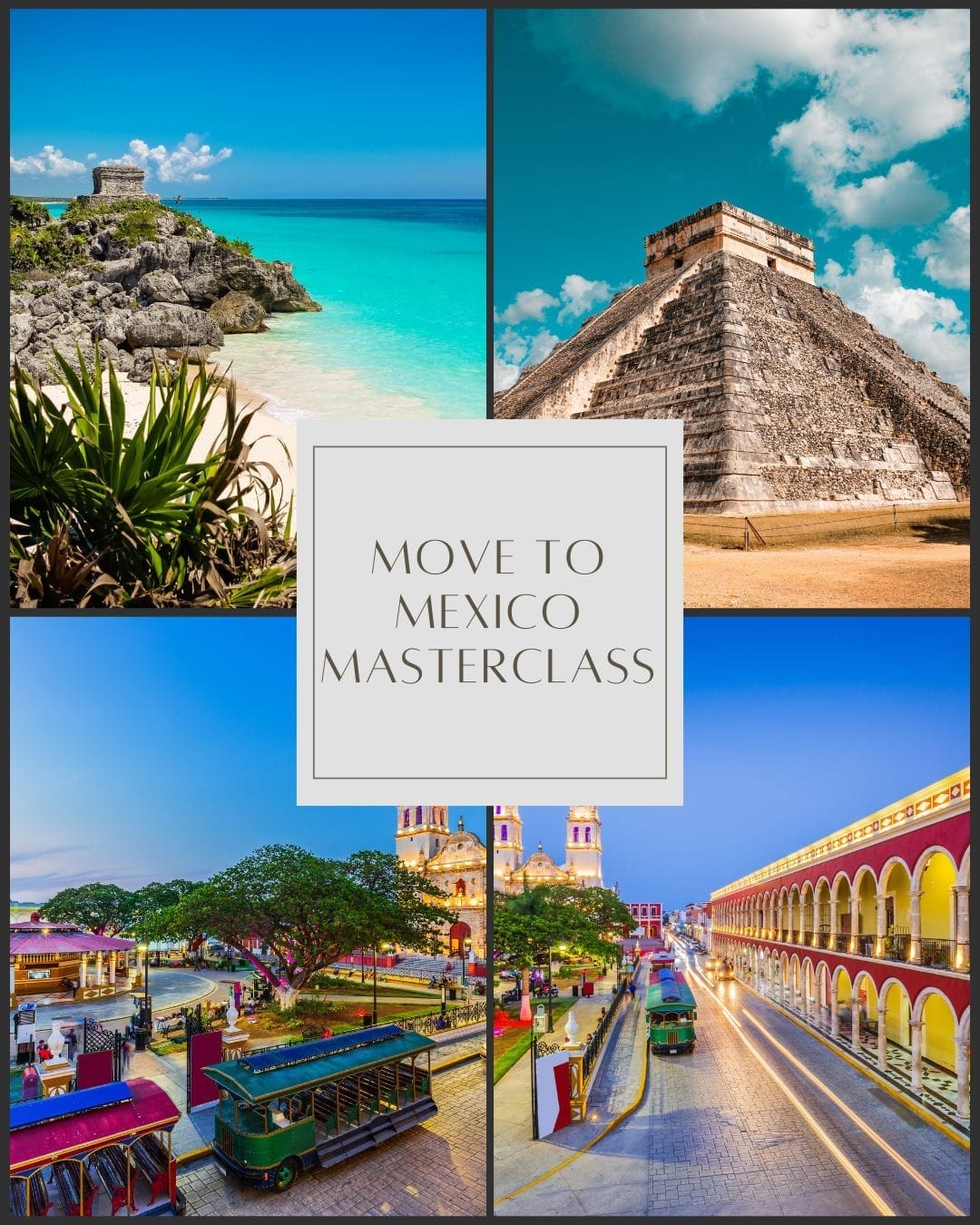
For families considering a move to Mexico, our Move to Mexico Masterclass provides comprehensive guidance on navigating schools, healthcare, residency requirements, and family logistics. This online course walks you through each step with detailed checklists, cost breakdowns, and proven strategies for a smooth transition.
Mexico offers an exceptional quality of life for families willing to embrace change and approach the move methodically. Yes, challenges exist, but many of the practical concerns that keep people from making the leap are more manageable than they appear from a distance. Sometimes the things we worry about most turn out to be the easiest parts of the journey.
If you're serious about making this life-changing move, our
online course provides comprehensive guidance on everything from residency requirements and healthcare to finding the perfect community and integrating into local culture, helping you make a smooth and successful transition.
Written by Mark Benson
Mark, a remote software developer from Vancouver, lives in Mérida with his wife and teenage kids. He writes about practical family relocation—covering schools, healthcare, and safety in Mexico. With his balanced approach, Mark’s articles guide families toward a smoother transition and a more affordable, family-focused lifestyle abroad.
📍 From Vancouver, now in Mérida
Mark’s practical insights guide families through relocation, schooling, and family life abroad. His balanced writing helps readers find stability under the Mexican sun.
Read Articles by Mark →
Global Citizen Life
© 2023 Global Citizen Life
All rights reserved